
The AI chatbot wars of 2026 look nothing like they did two years ago. What was once a clear hierarchy, with ChatGPT sitting comfortably at the top, is now a genuinely competitive landscape where five serious contenders are fighting for a spot in your workflow, each with distinct strengths, real weaknesses, and a clear identity of who they’re built for.
If you’re wondering which AI chatbot deserves your time (and possibly your $20/month), this is the guide for you. We’ve tested all five across writing, coding, research, real-time information, pricing, and everyday usability, and the answer isn’t as simple as picking one winner.
Quick Verdict: Which AI Should You Use?
| AI Chatbot | Best For | Paid Plan | Biggest Weakness |
| ChatGPT (GPT-5.5) | Versatility, agentic tasks, image generation | $20/mo (Plus) | Over-cautious tone, writing feels generic |
| Claude (Opus 4.8) | Writing, coding, long documents, analysis | $20/mo (Pro) | No native audio/video multimodal |
| Gemini (3.1 Pro) | Google Workspace, massive context window, multimodal | $19.99/mo | Creative writing, coding quality |
| Grok 4 | Real-time X/Twitter data, live trends | $30/mo (SuperGrok) | High hallucination rate, political bias |
| Perplexity Pro | Fact-checked, cited research | $20/mo | Not a general-purpose chatbot |

The Five Contenders: A Deep Dive
ChatGPT (OpenAI GPT-5.5) — The All-Rounder

OpenAI’s ChatGPT remains the most recognised name in AI — and with good reason. GPT-5.5, released in April 2026, is the latest in a rapidly evolving model family that has fundamentally shifted toward agentic, multi-step task completion rather than simple conversational response.
What Makes ChatGPT Stand Out
The headline achievement of GPT-5.5 is computer use. Its OSWorld performance of 75% surpasses the human expert baseline of 72.4%, meaning it can operate your computer interface — filling forms, navigating websites, and completing multi-step tasks across applications — autonomously and reliably. No competing model has crossed this threshold.
For anyone building automated workflows or looking to delegate complex, sequential tasks to an AI, this is a meaningful capability leap. GPT-5.5 is also the backbone of OpenAI’s Codex product and holds fidelity well in structured output tasks like JSON generation, schema compliance, and formatted reports — even far into the context window.
The ChatGPT ecosystem also remains unmatched for breadth: image generation via DALL-E, Custom GPTs, voice mode, memory, and deep third-party integrations all come bundled in.
Where ChatGPT Falls Short
The GPT-5.x series has polarised its longtime user base. OpenAI optimised for safety, brevity, and reduced liability, which means it now defaults to shorter, more hedged, more cautious answers unless you explicitly ask for more. Users who loved GPT-4’s verbose helpfulness often feel the new version is less useful for everyday creative tasks.
Writing quality, while improved, still occasionally produces output that a careful reader will immediately identify as machine-generated. Memory retention within a session is also inconsistently managed — it can forget context from just a few messages earlier.
ChatGPT Pricing (2026)
| Plan | Price | Key Features |
| Free | $0/mo | GPT-5.2, 10 msgs/5hrs, basic tools |
| Go | $8/mo | 10x more messages, image generation |
| Plus | $20/mo | Full GPT-5.5, Thinking mode, voice, ad-free |
| Pro | $200/mo | Unlimited, max compute |
Verdict: ChatGPT is the best all-purpose default, especially for agentic workflows, computer use, and users who need image generation built in. If you only subscribe to one AI and do varied work, this is still the safest starting point.
Claude (Anthropic) — The Writer’s & Developer’s Choice
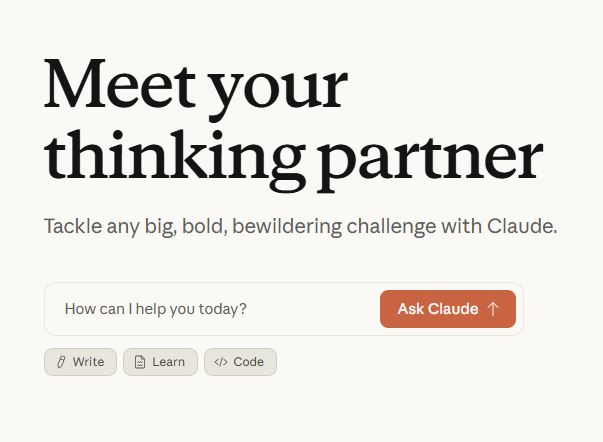
Anthropic’s Claude has quietly become the most respected AI among writers, developers, and researchers who interact with AI daily. Claude Opus 4.8, released May 28, 2026, is the current flagship — and it represents the most significant shift yet: stronger agentic capabilities alongside its already-dominant writing and reasoning qualities.
What Makes Claude Stand Out
Writing quality is where Claude consistently beats every competitor. The prose is natural, tonal nuance is preserved, and it doesn’t produce the over-formatted, bullet-heavy output that plagues most AI-generated text. For long-form blog posts, research papers, business reports, or any content where a human will be the final judge of quality, Claude is the go-to.
Coding is Claude’s second major strength. On SWE-bench Verified — a standard coding benchmark — Claude scores 87.6% versus Gemini 3.1 Pro’s 80.6%. It powers Cursor and Windsurf, two of the most popular developer tools in 2026, and dominates the developer tooling ecosystem precisely because it handles multi-file refactoring, long codebase context, and nuanced code review better than its competitors.
Reliability and calibration is the third pillar. Claude’s high-stakes confidence-contradiction rate of 26.4% is 9.8 points lower than ChatGPT’s 36.2% — meaning it is significantly less likely to confidently assert something incorrect when the stakes are high. Context reliability across its full window also shows less than 5% accuracy degradation, outperforming GPT-5.4 on long-document tasks.
Where Claude Falls Short
Claude has no native audio or video multimodal processing — Gemini leads clearly here. API pricing for Claude Opus is premium ($15/$75 per million tokens input/output), making it expensive for high-volume use. And while Claude’s ecosystem is growing rapidly with Claude Code and agentic tools, it still trails ChatGPT’s breadth of consumer-facing features.
Claude Pricing (2026)
| Plan | Price | Key Features |
| Free | $0/mo | Limited Claude Sonnet access |
| Pro | $20/mo | Opus 4.8 & Sonnet 4.6, Projects, Research |
| Max | Higher tiers | Extended usage limits |
| Team/Enterprise | Custom | Collaboration, admin controls |
Verdict: Claude is the best choice for writers, developers, lawyers, analysts, and anyone whose primary use case is working with text or code at a high quality bar. If your work involves producing output that will be read and judged by humans, Claude gives you the cleanest results.
Gemini (Google) — The Multimodal Powerhouse
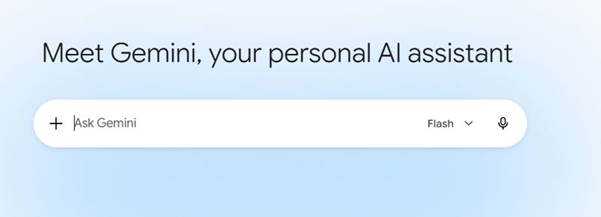
Google’s Gemini 3.1 Pro is the most underrated AI in this comparison. It quietly leads in several key categories that matter enormously for specific workflows — and for anyone already living in the Google ecosystem, it may be the obvious choice.
What Makes Gemini Stand Out
Context window is Gemini’s most significant technical edge. With a 1–2 million token context window — the largest available — it can process entire books, massive codebases, or sprawling datasets in a single pass that would require chunking and multiple calls in every other model.
Multimodal capability is Gemini’s second superpower. It natively handles audio, video, images, and documents — making it the only major frontier model where you can upload a video meeting recording and ask it to summarise action items, or feed it an audio file for transcription and analysis.
Google Workspace integration is seamless and deep. If your workflow already runs through Gmail, Docs, Drive, Sheets, and Meet, Gemini is embedded directly into those tools in ways that no other AI can match.
On reasoning benchmarks, Gemini 3.1 Pro leads on ARC-AGI-2 (77.1% vs Claude’s 68.8%) and BrowseComp (85.9% vs 79.3%). At $19.99/month — the cheapest of the major paid plans — it also offers the best price-to-capability ratio for certain workflows.
Where Gemini Falls Short
Creative writing is more mechanical with Gemini than with Claude. Coding quality, while improving, still trails Claude and GPT-5.5 on SWE-bench. And in production multi-model testing, Gemini had the lowest “catch ratio” of 0.26 — meaning it is the least likely of all five models to catch other AI’s confident errors.
Gemini Pricing (2026)
| Plan | Price | Key Features |
| Free | $0/mo | Gemini 3.1 Flash access |
| Google AI Pro | $19.99/mo | Gemini 3.1 Pro, 1M token context, Workspace integration |
Verdict: If your work already lives in Google’s ecosystem or you regularly need to process video, audio, or massive documents, Gemini is the clear choice — and at $19.99, it’s the best-value premium tier available. For pure writing or coding tasks, look elsewhere.
Grok (xAI) — The Real-Time Maverick
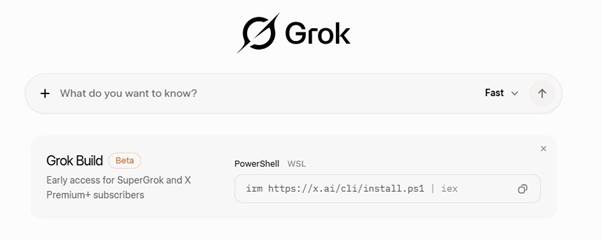
Elon Musk’s Grok is the most distinctive personality in this lineup — and also the most divisive. Built with native access to X (formerly Twitter) data and designed for fast, contrarian, less-filtered responses, Grok occupies a niche that no other AI chatbot fills.
What Makes Grok Stand Out
Real-time X/Twitter integration is Grok’s defining capability. For anyone working in social media, PR, journalism, or trend analysis, Grok can surface what’s actually being said right now — not what was indexed last week. No other major AI has this kind of live social stream access.
Raw benchmark performance is surprisingly strong. Grok 4 leads raw SWE-bench scores at 75%, and its speed on simple queries is competitive with any model on the market.
Personality and tone appeal to users who find ChatGPT and Claude too cautious and corporate. Grok is more willing to engage with controversial topics, offer contrarian takes, and skip the ethics disclaimers that prefix responses in other models.
Where Grok Falls Short
The hallucination problem is severe and well-documented. Grok-3 scored 94% error rate on the Columbia Journalism Review citation accuracy test — the highest of any model tested. It is the worst in this comparison for factual reliability, and should never be used as a primary source for research or fact-sensitive work without verification.
Grok’s responses can also reflect Elon Musk’s personal worldview, manifesting as political bias on certain topics. On politically charged or historically sensitive subjects, this can produce misinformation dressed up as confident assertion.
Finally, pricing is steep: SuperGrok at $30/month is 50% more expensive than Claude Pro, ChatGPT Plus, and Perplexity Pro for a more limited use case.
Grok Pricing (2026)
| Plan | Price | Key Features |
| X Premium | $8/mo | Limited Grok access |
| SuperGrok | $30/mo | Full Grok 4, real-time X data |
| Heavy | $300/mo | Maximum compute tier |
Verdict: Grok is a specialist tool, not a general-purpose assistant. If you work in social media, live trends, or need real-time X/Twitter intelligence, it’s invaluable. For everything else, the citation risk is too high to rely on it as your primary AI.
Perplexity — The Research Engine
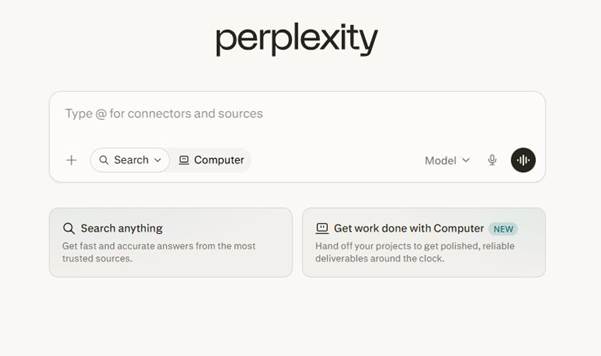
Perplexity is the odd one out in this comparison — and intentionally so. It’s not trying to be a creative writing partner, a coding assistant, or a conversational chatbot. It’s purpose-built to be the most accurate, citation-grounded answer engine available, and at that specific job, it’s unmatched.
What Makes Perplexity Stand Out
Citation accuracy is where Perplexity dominates. Perplexity Sonar Pro achieves a 37% citation error rate on the Columbia Journalism Review test — a 30-point lead over ChatGPT Search and a 57-point lead over Grok 3. Every response is grounded in real-time web sources with inline citations, making it the most trustworthy source of current factual information of any AI in this comparison.
Catch ratio is the second remarkable stat. In production multi-model testing across 1,324 turns, Perplexity had the highest catch ratio of 2.54 — more than twice Claude’s 2.25 and nearly 10 times Gemini’s 0.26. It is better than any other model at identifying when another AI is confidently wrong.
Real-time web grounding means Perplexity retrieves source material that parametric models simply cannot access — making it structurally different from ChatGPT or Claude’s “browse as fallback” approach.
Where Perplexity Falls Short
Perplexity Pro underwent a dramatic reduction in Deep Research limits in early 2026 — from hundreds per day to just 20 per month — making it less useful for heavy daily research workflows. It is not designed for creative writing, extended conversation, coding, or document generation. Think of it as a very smart research librarian, not an all-purpose assistant.
Perplexity Pricing (2026)
| Plan | Price | Key Features |
| Standard | $0/mo | Basic search-grounded answers |
| Pro | $20/mo | Sonar Pro, advanced models, file uploads |
Verdict: Perplexity is essential if you need reliable, cited answers to factual questions — for journalists, researchers, students, and analysts. It’s not a replacement for any of the other four; it’s a complement to them.
Head-to-Head: Which AI Wins Each Category?
Writing Quality
Winner: Claude Claude’s prose is consistently the most natural, nuanced, and human-sounding. ChatGPT has improved but still trends toward generic structure. Gemini is more mechanical. Grok is raw and unfiltered — interesting, but inconsistent.
Coding & Software Engineering
Winner: Claude (ecosystem) / Grok 4 (raw benchmarks) Claude powers Cursor and Windsurf — the tools professional developers actually use. Grok 4 leads raw SWE-bench at 75%, but its hallucination risk undermines production use. For real-world coding workflows, Claude’s reliability wins.
Real-Time Information
Winner: Grok (social/X data) / Perplexity (web-grounded facts) These two split the category. Grok is unmatched for live X/Twitter intelligence. Perplexity wins for cited, accurate web research. ChatGPT, Claude, and Gemini trail significantly here.
Research & Fact-Checking
Winner: Perplexity No contest. Citation accuracy is 30+ points ahead of the nearest competitor. If facts need to be verifiable, Perplexity is the only trustworthy choice in this group.
Multimodal (Video, Audio, Images)
Winner: Gemini Native audio and video processing that no other frontier model offers. If you’re working with multimedia, Gemini is the only option worth considering.
Long Document Processing
Winner: Gemini (context window size) / Claude (reliability within window) Gemini’s 1M+ token window handles larger inputs. Claude’s accuracy across its context window is more reliable. The choice depends on whether volume or precision matters more.
Agentic & Multi-Step Tasks
Winner: ChatGPT GPT-5.5’s computer use capability, Codex integration, and agentic routing make it the best choice for delegating complex, multi-step workflows to an AI.
Price-to-Value
Winner: Gemini ($19.99/mo) Cheapest premium plan with the largest context window and best multimodal capability. Runner-up: Claude Pro at $20/mo for writing and coding value.
Reliability & Accuracy
Winner: Claude / Perplexity Claude has the lowest high-stakes hallucination rate. Perplexity has the highest citation accuracy. Grok has the worst hallucination rate by a significant margin.
Personal Testing: The Same Prompt, Five AI Chatbots
One of the most instructive things you can do is run the same prompt through all five and compare. Here are the prompts we recommend — and what to look for in each response.
Test 1: Writing Quality
Prompt: “Write a 150-word opening paragraph for a blog post about why most people fail at building habits. Make it compelling, human, and avoid clichés.”
What to watch: Claude will likely produce the most natural-sounding prose. ChatGPT may be polished but slightly safe. Gemini may feel more structured and less emotive. Grok may surprise with a contrarian angle. Perplexity may deflect to sourced articles rather than writing original content.
Test 2: Real-Time Information
Prompt: “What are the top 3 AI news stories from this week? Give me sources.”
What to watch: Perplexity will provide accurate citations. Grok will pull from X conversations. ChatGPT will attempt web search with variable accuracy. Claude may acknowledge its knowledge cutoff. Gemini will use Google Search grounding.
Test 3: Hallucination Check
Prompt: “Who won the Booker Prize in 2024 and what was the book about? Give me 3 facts about the author.”
What to watch: This is the trust test. Perplexity and Claude tend to perform best here. Grok is the most likely to confidently produce incorrect author facts.
Test 4: Coding
Prompt: “Write a Python function that takes a list of strings and returns only the ones that are palindromes, ignoring case and spaces. Include edge cases.”
What to watch: Claude and ChatGPT both handle this well. Compare the edge case handling and the explanation quality.
Test 5: Personality & Creativity
Prompt: “Write a tweet from the perspective of a tired medieval blacksmith who just discovered the internet. Keep it under 280 characters.”
What to watch: This is the most entertaining test — and the one that most clearly reveals personality differences. Claude tends to be more literary. ChatGPT more polished. Grok more irreverent. The results are surprisingly different across all five.
The Smartest Approach in 2026: Use the Right AI Tool for the Job
The biggest mistake people make is looking for one AI to do everything. In 2026, the smartest users aren’t picking a single winner — they’re building a small stack:
| Task | Best AI to Use |
| Long-form writing & editing | Claude |
| Fact research with citations | Perplexity |
| Coding & development | Claude / ChatGPT |
| Google Workspace tasks | Gemini |
| Real-time social trend tracking | Grok |
| Image generation | ChatGPT |
| Multimodal analysis (video/audio) | Gemini |
| Agentic / automated workflows | ChatGPT |
The pragmatic $20/month approach: Subscribe to Claude Pro for writing and coding, use Perplexity Free for research, and use ChatGPT Free for tasks that require image generation or voice. Total cost: $20/month. Coverage: excellent across nearly every use case.
The $40/month power stack: Claude Pro ($20) + Perplexity Pro ($20). This combination covers 80% of professional use cases at the highest quality level in each category.
Final Verdict
There is no single best AI chatbot in 2026. There is only the best AI for your specific workflow.
- Choose ChatGPT if you want the broadest all-in-one tool with the best agentic capabilities and ecosystem breadth.
- Choose Claude if writing quality, coding reliability, and document analysis are your primary needs.
- Choose Gemini if your work lives in Google’s ecosystem or you need multimodal and massive-context processing.
- Choose Grok if real-time social data and live trend intelligence are central to what you do.
- Choose Perplexity if you need trustworthy, cited answers to factual questions.
The most successful AI users in 2026 aren’t loyal to one platform. They’ve learned where each tool shines — and built their workflow around that knowledge.
Here’s a short poem for you:
Hey You! Hey You!
Confused in AI tools?
Each has a role, try to stay cool.
Some write, some code, some search with flair,
Pick the right one with thoughtful care.
-Team WIO
WIO Karo, Chill Karo!